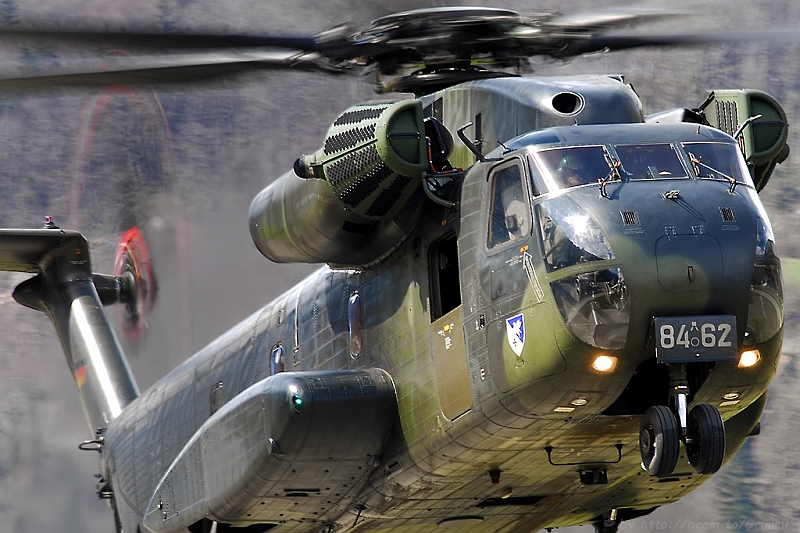
With the end of service life arriving for the Super Puma Helicopters in 2030 and the need of an transport aircraft, Councillor of State Peter Hess (CVP) requested some informations about using bigger, heavy-lift helicopters instead (September 23rd, 2015).
Today, the seven members of the Federal Council approved the study done since, rejecting the need mainly due budgetary causes.
The Council of State is the smaller chamber of the Federal Assembly of Switzerland, and is considered the Assembly's upper house, with the National Council being the lower house. There are 46 Councillors.
End of service life arriving for multiple systems in Swiss Army, Air Defence and Super Puma helicopters included.
Link (pdf), german:
https://www.newsd.admin.ch/newsd/message/attachments/50908.pdf
Le Conseil fédéral rejette l’acquisition d’hélicoptères gros-porteurs
Berne, 20.12.2017 - Lors de sa séance du 8 décembre 2017, le Conseil fédéral a approuvé, en réponse à un postulat du Conseil des Etats, un rapport étudiant la possibilité d’acquérir des héli-coptères gros-porteurs. Différentes options sont présentées dans ledit rapport, qui recommande de conserver la flotte actuelle malgré les restrictions d’emploi touchant les hélicoptères de l’Armée suisse.
Déposé par le conseiller aux Etats Hans Hess, le postulat 15.3918 demandait au Conseil fédéral d'étudier la possibilité d'acquérir des hélicoptères gros-porteurs pouvant être engagés par tous les temps à la place d'avions de transport. Contrairement à ces derniers, des hélicoptères gros-porteurs ne seraient en effet pas cantonnés aux engagements à l'étranger et pourraient rendre de précieux services en Suisse également. Le rapport du Conseil fédéral passe en revue les différences entre les hélicoptères actuellement en service au sein de l'armée et les gros-porteurs, notamment sur le plan des caractéristiques techniques et des possibilités d'engagement. Les exigences posées par les engagements en Suisse et à l'étranger, dans le cadre de la promotion de la paix et de l'aide humanitaire en cas de catas-trophe, sont également analysées. Enfin, différentes possibilités de développement de la flotte d'hélicoptères de l'armée tenant compte de la situation budgétaire sont détaillées.
Pas d'acquisition avant la fin de la durée d'utilisation de la flotte actuelle
L'acquisition d'hélicoptères gros-porteurs permettrait d'élargir l'éventail des prestations dans le domaine du transport aérien en Suisse et à l'étranger, mais des appareils de cette taille présentent des inconvénients sur les plans financier et opérationnel. L'acquisition d'une flotte d'une taille semblable à l'actuelle n'est finançable ni dans l'immédiat, en raison du renouvel-lement planifié d'autres moyens de l'armée, ni au cours des années 2020. Une flotte de taille réduite pèserait sur la flexibilité de l'engagement des machines. Le rapport arrive ainsi à la conclusion que la flotte actuelle doit être conservée jusqu'à la fin de sa durée d'utilisation dans les années 2030 malgré les restrictions qui l'accompagnent et rejette l'idée d'acquérir des hélicoptères gros-porteurs avant cette échéance. En contrepartie, les hélicoptères Cougar de l'Armée suisse bénéficieront d'un programme de maintien de la valeur, que le Conseil fédéral entend soumettre au Parlement en février 2018 dans le cadre du prochain programme d'armement.
Adresse pour l'envoi de questions
Karin Suini
Porte-parole du DDPS
+41 58 464 50 86

With Boeing's C-17 Globemaster III already out of production (and really too big for Switzerland's use), the search for a new transport aircraft will going on the next few years. Our Governement already missed a good opportunity to adopt a C-130 Hercules with the aquisition by Austria. Still my favorite solution, we should buy one more for Austria (also a neutral country with three C-130K at the moment) with all the maintenance and pilot school made there. One Herc available for our own flight crews with something like 24h reservation in advance and maybe in neutral or white UN colors. Win-Win for Austria and Switzerland.

Another very good solution for a new transport aircraft (my personal opinion) is Casa's C-295. Also in use by many nations in europe, this 'little Hercules' should give enough transport capacity for foreign exercises, helping continental disaster relief, immigrant returns (actually made via expensive civil charter and line flights) and organisations like the UN and Red Cross.
With maintenance costs of 2-3 millions CHF arriving for the Beech 1900D T-729 in the end of 2018, our actual transport aircraft
should be sold and exchanged by two CL604 Canadair Jets of the REGA Air Ambulance.
The Pilatus PC-24 will be our new government jet aircraft.
Medium and heavy lift helicopters not in sight for the next decade
Transport capacity is surely needed in near future. But is an medium/heavy transport helicopter the better solution for Switzerland than an transport aircraft ?
Helicopters can be used like transport aircrafts. Less effective (slow if not transported in an aircraft) abroad, but giving new possibilities/capacities in and around Switzerland. The boost in transport capacity from the Alouette III to the Super Puma has given our army for the first time an effective and fast system for troop concentration/mobility. And with the humanitarian aid (
Indonesia 2005),
Security aid (Kosovo Force KFOR), disaster relief (
Avalanches in Austria 1999) and fighting forest fires in Montenegro (2017), Israel (2010), Portugal and Italy (2017) - the Swiss Air Force has proven a high quality of working in difficult conditions and a fast line of command answering requested demands.
A Helicopter needs some equipment (engines, cockpit instruments, mechanics), and the difference in weight for that in a big or a smaller cell is not important. Meaning a bigger cell can transport more (in principe). With a cargo door in the back of the helicopter, equipment can be transported inside and giving some security regarding underslung loads. A typical heavy helicopter can transport 11t at sea level, dropping to 8700kg if he's armored and has some defensive systems installed (Cougar: 1700kg). At 3000m, the transport capacity resting at 4000kg (Cougar: 750kg).
Super Puma and Cougar helicopters are mainly used for transporting small detachments of up to 15 soldiers. With a bigger helicopter or a transport aircraft, the governmental 'security policy 2016' - more international cooperation and peace support - will be much easier to succeed. Today's Cougar fleet is not very helpful in tropical conditions, the main area where UNHCR needing help and Switzerland had to decline regular requests of this and other organisations.
You can find more information in the linked pdf above, but the end of the story was that heavy helicopters where surely a 'nice to have', but the actual fleet is capable of the most needed duties. Budget and personal limitations are also an important factor, but heavy helicopters are for sure to have a look at due evaluation after our fleet is reaching the end of the service live.
European and US models are surely preferred by our government due political and technical needs.
NH-90 is introduced in many neighbour countries in the last few years.
Germany is using the CH-53 Stallion intensively in Switzerland, training in snow and high conditions out of Alpnach/Dübendorf and Meiringen. But the old gear is using a lot of maintenance and the Luftwaffe is interested to buy the new CH-53K model instead.
Already in use by Italy, Spain and the Netherlands, the Chinook whould be one of the possibilities for Switzerland.

Mil Mi-8 and it's derivates are still very interesting for transport capacity and combat proven. But with the political situation in Russia and expensive maintenance plus the compability missing to our actual systems still a no go.

An interesting mix of functions - V-22 Osprey